
The 2026–27 super El Niño will strain hydropower production across ASEAN, intensify intra-regional disputes over shared rivers and once again make Southeast Asia beholden to China’s hydro hegemony.
The world’s leading climate models now put the probability of a super El Niño at 81%. A super El Niño occurs when the sea surface temperature in parts of the Pacific Ocean rises by more than 2°C above the average. The 2026 event is rather special as the forecasted rise exceeds an unprecedented 3°C above average, which would make it the strongest on record.
The transfer of ocean heat from the eastern tropical Pacific Ocean to the atmosphere is already being felt in peninsular and archipelagic Southeast Asia raising the prospects of droughts, wildfires and saltwater intrusion along coastlines. This has profound implications for ASEAN countries that stretch far beyond weather and agriculture.
Water availability has become central to nearly every ASEAN country’s economic strategy. Landlocked Laos depends on uninterrupted upstream river flows to sustain the hydropower exports that have made it the “Battery of Southeast Asia.” Vietnam, the region’s hydropower leader, relies on it to power its vast manufacturing base. Myanmar sits on vast untapped hydropower potential that it seeks to monetize. Traditional agricultural demand for water persists in rice exporters Vietnam and Thailand and palm oil exporters Malaysia and Indonesia. More recently, a new source of industrial demand for water has emerged with the boom in data centre construction in Malaysia, Thailand and Indonesia.
The drier and warmer weather will drastically shrink hydropower generation as rivers shrivel and reservoirs deplete. The 2023-24 El Niño led to a region-wide decline in hydropower generation resulting in blackouts in Vietnam and Indonesia, and pushing Thailand back towards fossil fuels. The stakes are considerably higher now as many ASEAN nations have doubled down on hydropower to meet their renewable energy targets, a process made more urgent in 2026 due to higher energy prices following the Iran war.
The Strained Geopolitics Of Water In Southeast Asia
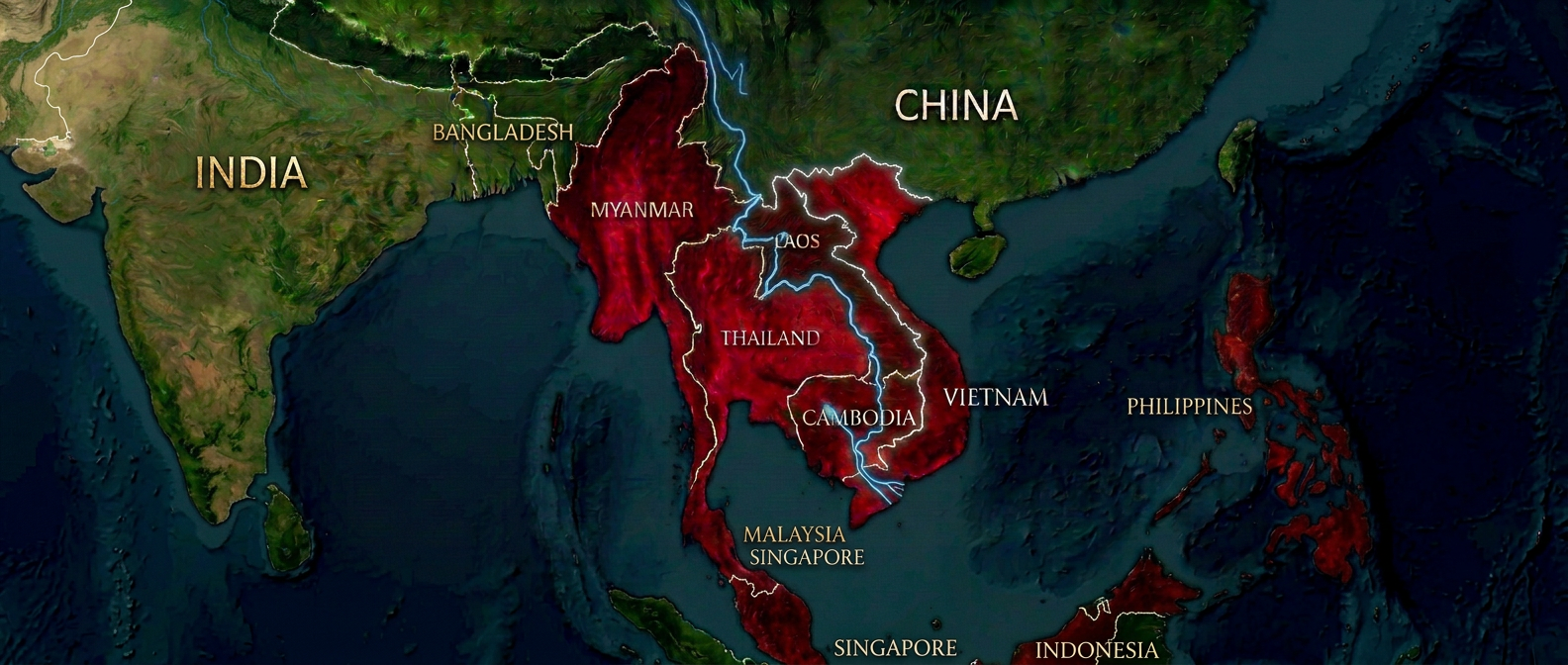
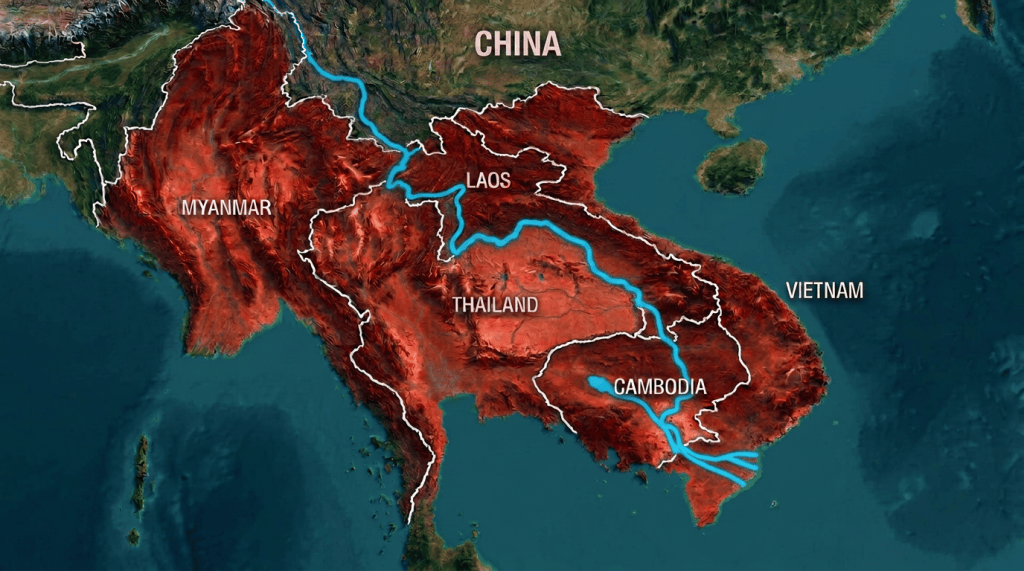
The pursuit of economic growth has intensified competition for water resources across Asia, a contest in which China has had an early start as well as an upper hand due to its access to upstream rivers. Southeast Asia’s principal freshwater sources are the Mekong and the Salween, both of which rise on the Tibetan Plateau in China, and the Irrawaddy, which originates in Myanmar’s Kachin State. With twelve operational dams on the mainstream of the upper Mekong River— which China calls the Lancang — and numerous others on its tributaries, China’s actions have affected the availability of river water to its riparian neighbours. Even without an event like El Nino, China’s discretionary dam management has caused wet season droughts and dry season floods in downstream Mekong countries.
The China led monthly police boat patrols along the upper Mekong River, running continuously since 2011, have also raised distrust and resentment. These ostensibly multilateral patrols are widely regarded as a tool to project influence deep into the Mekong basin under the cover of securing shipping lanes and combating drug trafficking.
China has long cemented its position as Asia’s paramount upstream power. ASEAN’s dependence on Chinese goodwill was laid bare during the last super El Niño, which occurred in 2015–16, when Vietnam — facing its worst drought in a century and a devastated rice crop — had to request China to release water from its Jinghong hydropower station. Thailand, the region’s other major rice producer, resorted to pumping water directly from the Mekong mainstream to irrigate drought-stricken farmland.
The severe drought and water crisis caused by the super El Niño of 2015-2016 did lead to the establishment of the Lancang-Mekong Cooperation (LMC) mechanism by China. But it fell short of an enforceable water sharing commitment and at best remains a platform for elective sharing of hydrological data by China and coordination of reservoir releases. Meanwhile, the region’s older cooperation platform, the Mekong River Commission (MRC), has been steadily side lined with China’s participation limited to being a dialogue partner.
Beijing’s reach extends further still through direct investment. Chinese state and private entities have built, financed or developed a string of dam projects across ASEAN under the Belt and Road Initiative, several designed explicitly to export power back to China. This year, Myanmar’s long-shelved, Chinese-financed Myitsone Dam re-emerged as a geopolitical flashpoint after it was revived at China’s behest. Beyond the Mekong basin, Indonesia’s Batang Toru hydropower project has taken on a similar dimension: though formally owned by local companies, the perception of Chinese financing and involvement has made it a target of anti-China protests. The Kaliwa Dam dispute in Philippines has long had a similar geopolitical wrinkle alongside ecological and displacement concerns.
Disputes Among The Downstream Mekong States
Even among the MRC’s own founding members — Laos, Thailand, Cambodia and Vietnam — decades of effort have failed to produce workable joint management of their shared water resources.
Laos has clashed with every one of its downstream neighbors over its dam-building programme, much of it financed by China and, in some cases, by Thai banks. The Xayaburi and Don Sahong dams — the first two built on the mainstream lower Mekong — were completed over the sustained objections of Vietnam and Cambodia. At least three more mainstream dams are in advanced stages of construction or under way, with a fourth, the Sanakham project, drawing sharp objections from Thailand over its location barely two kilometres from the Thai border.
Regional hydropower leader Vietnam has generated friction of its own. Its dam cascade on the Se San River, a major Mekong tributary, dates to the 1990s and drew formal objections from Cambodia after poor early-stage dam management caused loss of life, and destroyed crops and livestock downstream. Cambodia, in turn, is now the source of a comparable grievance. Its Funan Techo Canal, construction of which began in 2024, has drawn objections from Vietnam over reduced downstream flow — compounded by unresolved rumors that the waterway could serve military as well as economic purposes.
The long history of disputes among the downstream Mekong states has left them structurally unable to present a united front in dealing with China. The 2026–27 super El Niño will very likely deepen their dependence on China’s goodwill rather than ease it.
A Region Running Short On Leverage
Four cities located on the Mekong Delta rank among the world’s fifty most at-risk urban centres for extreme heat, on a measure that weighs climatic hazard against social and infrastructural vulnerability and a state’s capacity to respond. It is telling that despite sitting atop some of the world’s largest river systems, the downstream Mekong states remain exposed to water insecurity — caught between China’s upstream hegemony, the relentless pressures of their own economic growth and their own persistent disunity.
For now the super El Niño is expected to peak sometime around November 2026 and persist into 2027 before taking several months to completely fade. Southeast Asia’s upcoming drought will look much like its last – rivers running low and geopolitical leverage running out. Only worse.

